
Running a Sex Offender Check in Lenoir County
The North Carolina Sex Offender and Public Protection Registry is the primary public source for Lenoir County sex offender records. The North Carolina State Bureau of Investigation maintains the statewide database, while the Lenoir County sheriff registers and verifies people living in Lenoir County. The registry covers only people with a current legal duty to register. It does not list every person with a criminal case or every offense involving sexual conduct.
Start with the statewide search because it offers name, address, coordinate, and Sex Registration Number routes. Use the Lenoir County Sheriff’s Office for current registration instructions, suspected noncompliance, or a fact tied to Lenoir County that needs confirmation. The federal NSOPW search adds other states and participating jurisdictions. Each source serves a distinct purpose, so an empty result in one search should be checked against the right geography and spelling.
Lenoir County Registry Monitoring
Lenoir County sheriff staff perform the registration and monitoring role. The Sheriff’s Records Division describes a detective-division secretary who assists with sex-offender monitoring, intelligence, and criminal-record checks. Call (252) 559-6100 before appearing so staff can give current hours, appointment instructions, and the correct Lenoir County registration contact. The official pages reviewed do not publish a separate online appointment form or dedicated registry counter schedule.
Responsibility is split by design. The Lenoir County sheriff gathers and verifies registration information; NCSBI collects it into the public statewide system. A change may therefore require action by Lenoir County staff before it appears in the public interface. Suspected failure to register, an apparently stale address, or another compliance concern should go to LCSO. Do not investigate through personal contact.
Lenoir County Sheriff
101 North Queen Street
Kinston, NC 28501
(252) 559-6100
Call first for registration and monitoring instructions.
Searching the North Carolina Sex Offender and Public Protection Registry
The registry lets a Lenoir County searcher begin with the fact they know best. A name can help confirm a known person. An address or coordinate search is better for nearby-area awareness. An SRN, short for Sex Registration Number, points to the registry’s unique identifier. Review the result rather than relying on a name alone.
- Open the official NCSBI registry and select the search mode that matches the known information.
- Enter a name with city or ZIP, a street address and radius, latitude and longitude, or an SRN.
- Review the map or result list. Compare aliases, physical descriptors, county, and other profile fields to avoid a mistaken match.
- Open the profile and read status, registered location, offense information, and registration dates in context. Confirm urgent Lenoir County concerns with LCSO.
| Field or control | Type | When used | Notes |
|---|---|---|---|
| Search by | Tabs or options | Required | Address, name/location, coordinates, or SRN |
| Last and first name | Text | Name mode | First name narrows the result |
| City and ZIP Code | Text or selection | Name mode | Helps focus on Lenoir County places |
| Street address | Text | Nearby mode | Used for a geocoded proximity search |
| Radius | Buttons or selection | Address mode | One, three, or five miles |
| Latitude and longitude | Numeric | Coordinate mode | Direct map coordinates |
| SRN | Text | SRN mode | Sex Registration Number |
| Email alerts | Action | Optional | Notice based on a configured area or person |
The captured official registry search shows the public entry screen used for Lenoir County searches without selecting or displaying a private individual.
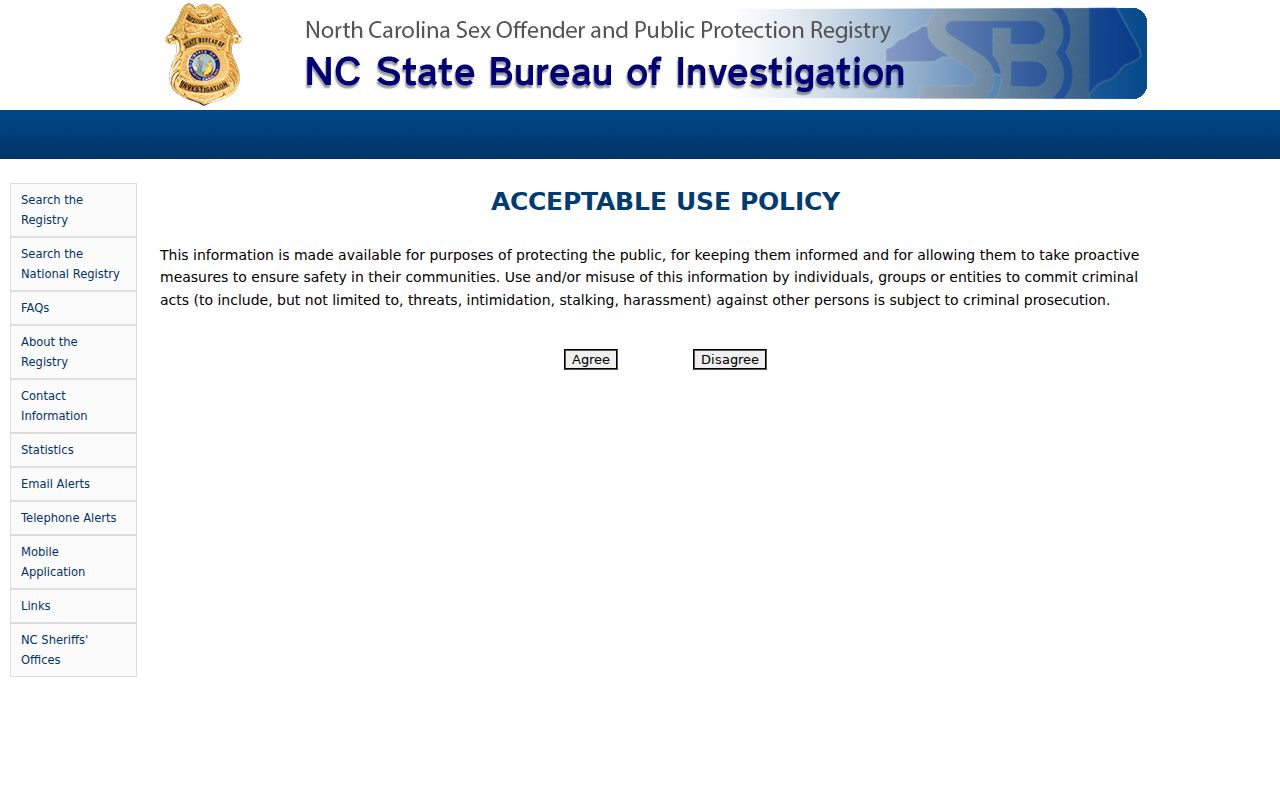
This interface is the right first layer for a Lenoir County sex offender check, while Lenoir County compliance questions stay with the Lenoir County sheriff.
Lenoir County Registry Proximity Alerts
A Lenoir County address search can be set to a one-, three-, or five-mile radius. This is useful for personal and family safety planning because it does not require knowing a registrant’s name. Coordinate search offers another route when a precise point matters. Map distance is still an interface estimate, not a land survey or proof that a person was at the mapped place at a given time.
Email alerts for Lenoir County add notice for a configured area or person. Treat them as updates, not as a real-time tracking service. Registry information is entered and verified through agencies, so moves, status changes, or correction work can take time to flow. If the alert conflicts with direct knowledge or appears urgent, call LCSO rather than confronting the person shown.
The North Carolina registry statistics interface is a separate official tool for Lenoir County counts.
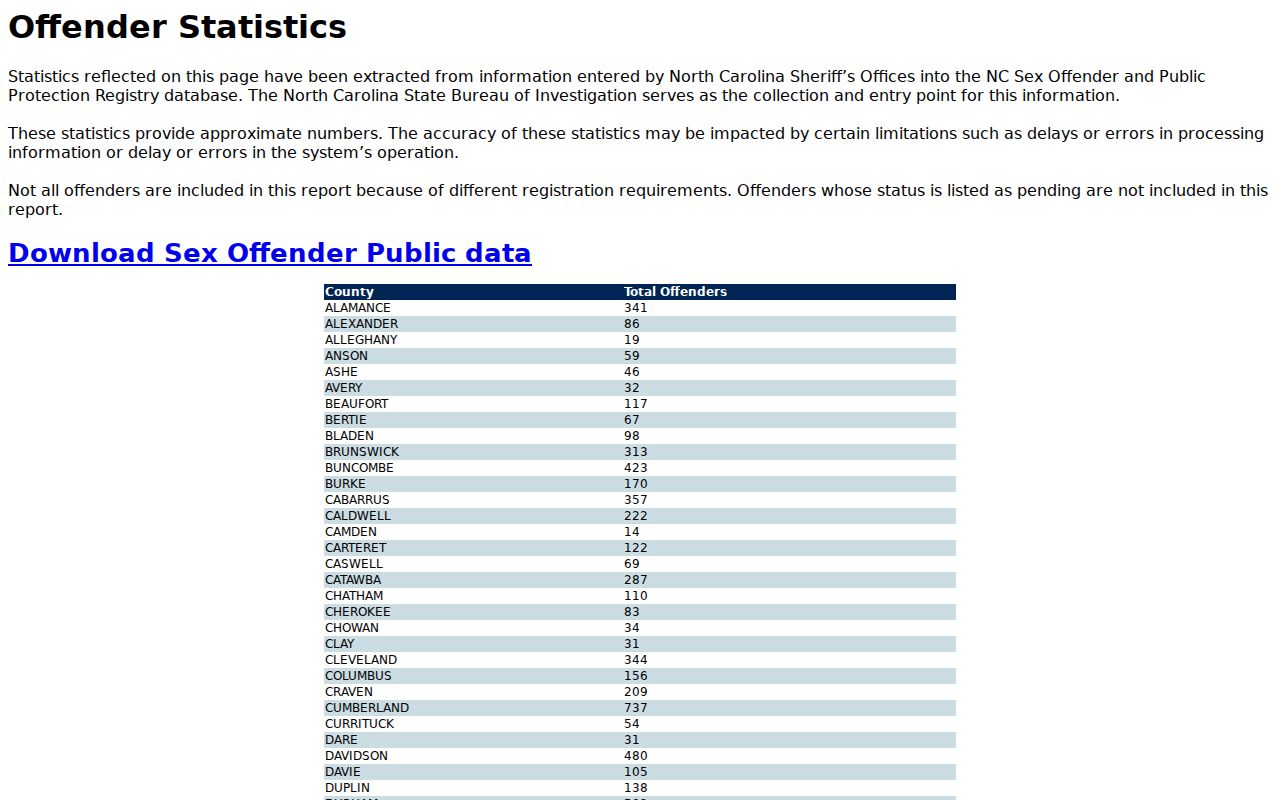
Registry counts reflect sheriff-entered records and should not be labeled as a Lenoir County crime rate or a live measure of current offending.
What a Registry Profile Shows
A public Lenoir County registry profile combines identification, location, conviction, and registration fields. It may also show photos and distinguishing marks. The field set helps users avoid matching only on a common name. Public disclosure follows Article 27A, and victim identity is not part of the public profile.
| Name and aliases | Registration name and other names recorded in the registry. |
|---|---|
| SRN and status | Sex Registration Number and the recorded registration standing. |
| Photo and description | Photographs, sex, race, age or birth data, height, weight, eye and hair color, and distinguishing marks when shown. |
| Registered location | Address or location and county information governed by public-release law. |
| Offense record | Offense description, conviction date, and conviction state as recorded. |
| Registration dates | Registration start and other timing or verification information shown by the system. |
| Not displayed | Victim identity is protected and does not belong in the public registry profile. |
A Lenoir County registry profile is not a full rap sheet. It does not replace the Lenoir County clerk’s criminal case file or a person’s fingerprint-based SBI Right to Review.
Lenoir Registry and NSOPW
The North Carolina registry is best for detail tied to Lenoir County and the state’s own registration system. The National Sex Offender Public Website, maintained as a U.S. Department of Justice resource, searches across participating state, territorial, and tribal registries. It is useful when a person may have moved or when safety planning crosses state lines.
The two sources should be treated as layers, not competing verdicts. NSOPW federates public data from jurisdictions, while North Carolina remains the direct state source for its profiles and controls. Differences can reflect timing, search format, or the source jurisdiction’s public fields. For a Lenoir County address or compliance issue, LCSO remains the practical contact.
The captured NSOPW entry screen illustrates the national search layer assigned to this Lenoir County registry page.
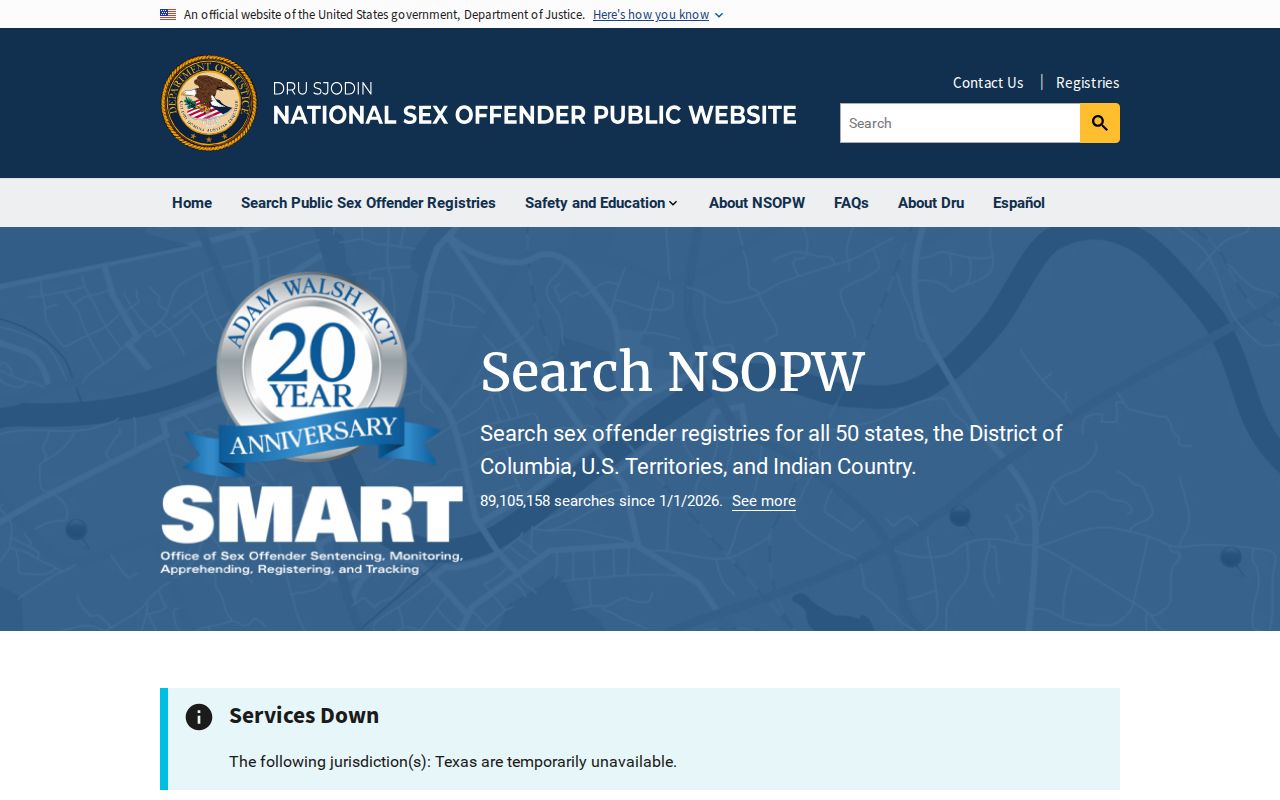
This national tool broadens geographic coverage but does not turn the Lenoir County profile into a complete criminal-history report.
Registration Requirements and Levels in North Carolina
North Carolina uses statutory programs rather than the simple public Tier 1, Tier 2, and Tier 3 labels used elsewhere. Initial registration is generally due within three business days of release or arrival, or immediately after a reportable conviction without active imprisonment. Duration depends on the applicable program and legal findings.
| Program or category | Duration | Verification or relief |
|---|---|---|
| Part 2 reportable offense | At least 30 years from initial county registration | May petition Superior Court after 10 years under G.S. 14-208.12A; removal is not automatic |
| Recidivist, aggravated offense, or sexually violent predator | Lifetime | G.S. 14-208.23 controls, with only statutory exceptions |
| Lifetime-program verification | Lifetime | Sheriff verification every 90 days under G.S. 14-208.24 |
The phrase “30 years” does not promise automatic removal on an anniversary. A qualifying person must meet the statutory petition rules, and the Superior Court decides relief. Lifetime duties and frequent verification are distinct from the Part 2 petition path.
Lenoir Registry Updates and Errors
The Lenoir County sheriff and NCSBI perform different steps in the update chain. A registrant reports and verifies required information with the Lenoir County sheriff. Lenoir County staff enter or update the record, while NCSBI maintains the statewide public collection. That split explains why the sheriff is the best source for a suspected Lenoir County compliance issue and the state website is the best public search layer.
Do not assume that a stale-looking address proves misconduct. Compare the profile’s status and dates, save the relevant SRN, and call LCSO with the specific concern. Staff can determine whether the matter needs verification or enforcement. For technical display questions or broader registry administration, use the NCSBI registry overview and its current instructions.
Note: Report suspected noncompliance to LCSO with precise facts, and let trained staff verify the Lenoir County registry duty.
Lenoir Registry Protects Victim Identity
North Carolina Article 27A defines the information used for registration and the fields that may be made public. It does not make victim identity public. A profile may describe the reportable offense and conviction, but readers should not infer, seek, or circulate the identity of a victim from those facts.
This boundary supports both accuracy and safety in Lenoir County. A registry entry concerns the registrant’s legal duty. It is not a case narrative, and it does not reproduce every court document. Anyone who needs the public court record should use the Lenoir County clerk and ordinary court-access rules while respecting sealed, confidential, and protected information.
Lawful Use and Community Notification
Lenoir County sex offender information is published for awareness and protection. Appropriate use includes checking an address, planning family safety, setting a lawful proximity alert, carefully matching a profile, and reporting a specific compliance concern to LCSO. Licensed day cares and school principals also have statutory one-mile notification registration duties under North Carolina law.
Lenoir County registry publication does not authorize harassment, threats, intimidation, vigilantism, or discrimination. Do not visit a listed address to test the record, contact a household, post accusations beyond the official profile, or try to enforce registration law personally. Call law enforcement for an urgent safety threat and use LCSO for a Lenoir County compliance report.
Registry misuse is unlawful: North Carolina’s Article 27A registry law provides information for public protection, not harassment, threats, intimidation, or vigilantism. Using registry data to commit a crime can bring criminal consequences.
Careful use protects the Lenoir County community and reduces mistaken identity. Recheck the official profile, note the date, and send suspected noncompliance to the Lenoir County sheriff rather than escalating it through public confrontation.