
How to Check Criminal History in Lenoir County
Start with the question the record must answer. The North Carolina eCourts Portal is the fastest first look at a Lenoir County criminal case. Smart Search can return case headers, parties, charges, events, hearings, dispositions, and financial entries. It is free for anonymous users. Yet Portal is not the official Lenoir County court record, and registration only adds saved-case tools. The Clerk of Superior Court remains the custodian of the official Lenoir County file.
Lenoir County names can vary across systems, and common names can lead to the wrong case. Gather a full legal name, prior names, approximate date of birth, and a case number if one is known. Then use this channel-by-channel sequence:
- Search Portal by party or case number, then filter the location to Lenoir County and the category to Criminal Actions.
- Compare the case number, file date, party role, charge, and court location before treating a result as a match.
- Inspect the Register of Actions for filed charges, hearings, disposition, and judgment rather than relying on an arrest allegation.
- Use a courthouse terminal or ask the Lenoir County clerk for documents that Portal omits, including older paper material.
- Order a certified clerk search or a fingerprint-based self-review when an official product is needed.
Lenoir County Criminal Records on Queen Street
Lenoir County concentrates several record keepers near Queen Street in Kinston. The Lenoir County courthouse holds the Superior and District Court files, the Clerk of Superior Court, the District Attorney, magistrates, and courthouse security. The Lenoir County sheriff complex is nearby. This arrangement helps in-person users move from a docket question to an agency question, but the offices still keep distinct records. The DA prosecutes cases and does not supply the Lenoir County clerk's official file. Magistrates handle initial process and release conditions, while the sheriff holds agency and custody material.
The official Lenoir County Courthouse page shows the primary records building and its visitor details.
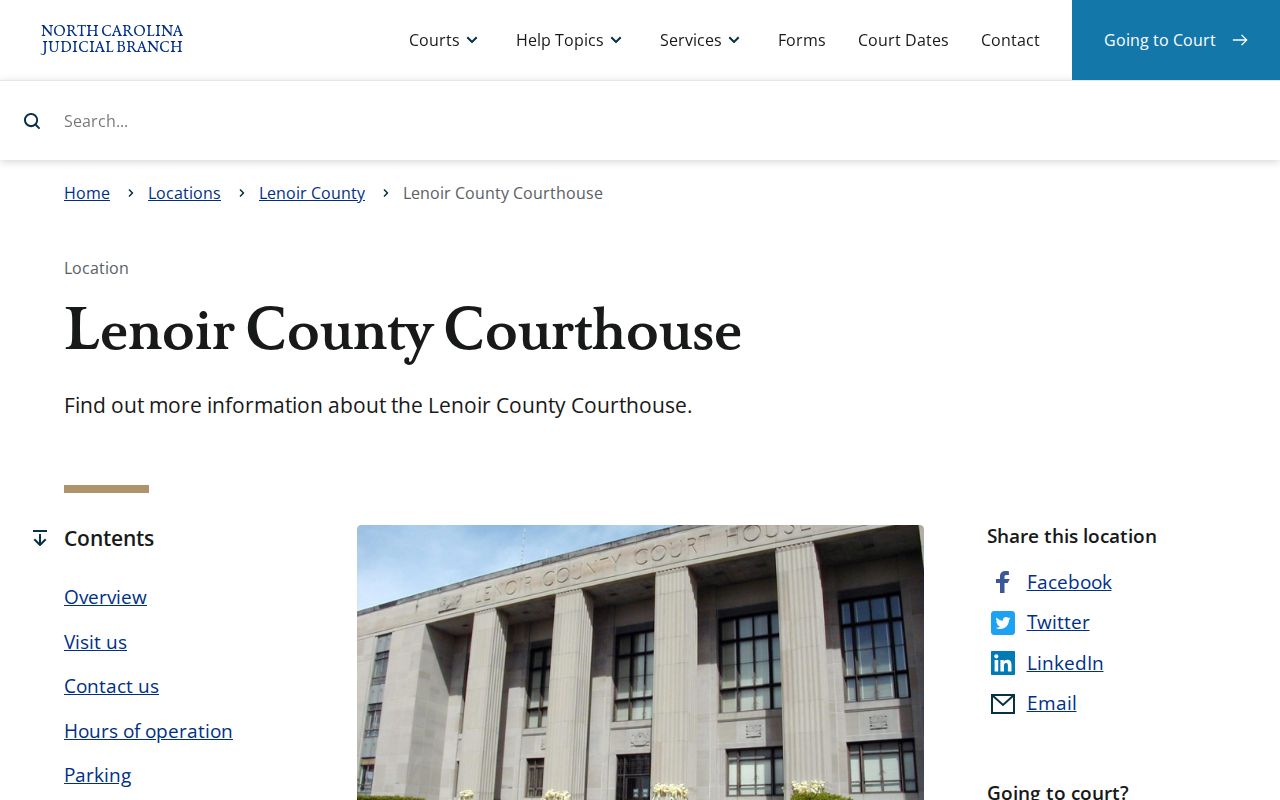
The Lenoir County clerk counter at 130 South Queen Street, Kinston, is open weekdays from 8:00 a.m. to 5:00 p.m. The main number is (252) 520-5300. Rear parking and right-side access near the magistrate office are noted on the court page.
Lenoir County Clerk
130 S. Queen St.
Kinston, NC 28501
(252) 520-5300
Weekdays, 8:00-5:00
Lenoir County Sheriff
101 N. Queen St.
Kinston, NC 28501
(252) 559-6100
County hours, 8:30-5:00
Official North Carolina Background Checks
North Carolina does not give the public an SBI name-search portal. For a review of one's own fingerprint-supported state record, use the NCSBI Right to Review. The person submits the current form, an FD-258 fingerprint card, and a $14 certified check or money order for each copy. Local law enforcement or an authorized fingerprint service can produce the card. The response is on SBI letterhead, but it is noncertified and meant for personal review and correction.
The official Right to Review instructions show why this product differs from a court-name search.
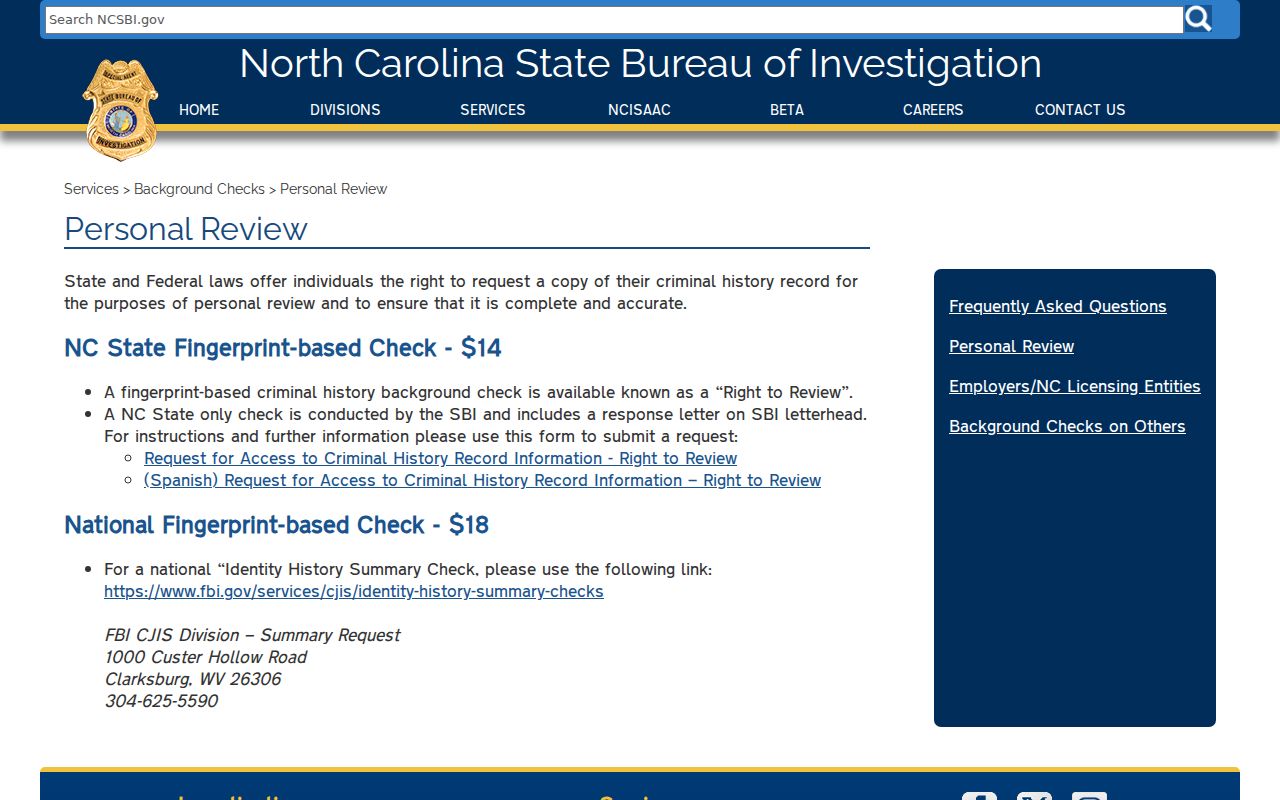
Fingerprints link the request to the repository identity. A Lenoir County clerk search, by contrast, is name based and covers only Lenoir County court records. The FBI also offers a subject-only Identity History Summary through its electronic request, mail, or approved channeler routes.
Lenoir County Criminal Case Copies
Portal is useful for discovery, not certification. Lenoir County joined eCourts Track 8 in April 2025, so Smart Search now offers near-real-time docket access. A public terminal at a clerk's office can search noncertified criminal records at no charge and may send records by email. Printing may cost extra. Paper files must be inspected where the case is held, which makes the Lenoir County clerk the right place for its local files.
The Judicial Branch criminal background check instructions describe the certified county option.
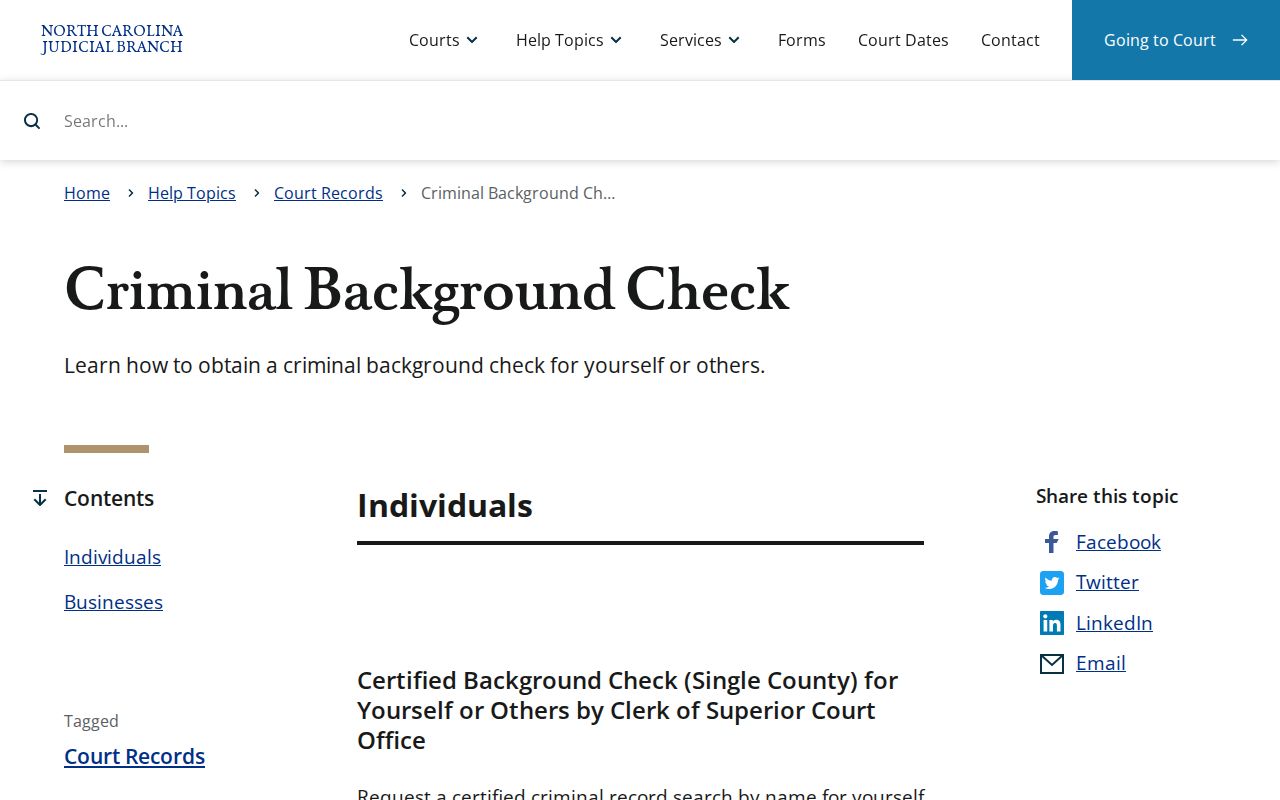
Form AOC-CR-314 and a $25 fee produce a certified single-county search. Mail accepts a money order or certified check, not a personal check. In-person payment may be made by cash, credit card, money order, or certified check.
| Access channel | Scope | Cost noted |
|---|---|---|
| eCourts Portal | Public docket information | Free anonymous access |
| Courthouse terminal | Noncertified court search | Free search; printing may cost |
| AOC-CR-314 | Certified Lenoir County name search | $25 |
| SBI Right to Review | Own fingerprint-supported state history | $14 per copy |
Types of Criminal Records
A Lenoir County criminal event can create several records, each with a different custodian and purpose. The arresting agency writes the incident or arrest report. The Lenoir County detention center makes the booking file. The clerk builds the court case. Fingerprints may connect the arrest cycle to the NCSBI Computerized Criminal History repository, while the North Carolina Department of Adult Correction records state imprisonment or supervision. The North Carolina Sex Offender and Public Protection Registry is limited to people who have a legal duty to register.
- Incident and arrest reports: agency records that state the event and public arrest facts, with investigative limits.
- Booking records: intake, identity, charge, bond, custody, and release data made by the jail.
- Court files: filed charges, hearings, motions, pleas, dispositions, judgments, and money entries.
- Repository records: fingerprint-supported statewide arrest cycles matched to reported outcomes.
- Correctional records: state prison, probation, parole, and post-release information maintained by NCDAC.
A Lenoir County arrest entry proves an arrest occurred, not guilt. Charges can change before indictment or judgment. A current Lenoir County file should be checked for its final disposition.
Lenoir County Sheriff Record Requests
The Lenoir County Sheriff's Office Records Division processes incident and arrest reports, warrants, DCI and NCIC entries, wanted-person entries, and local criminal-history checks. Call Reports Processing at (252) 559-6100 extension 5070 first. Staff can confirm whether the sheriff made the record or whether Kinston, La Grange, Pink Hill, Highway Patrol, or a campus agency is the proper custodian. The office does not publish an online request portal, set copy fee, promised turnaround, or walk-in identification rule.
The official sheriff site is the agency gateway for Lenoir County criminal records and detention functions.
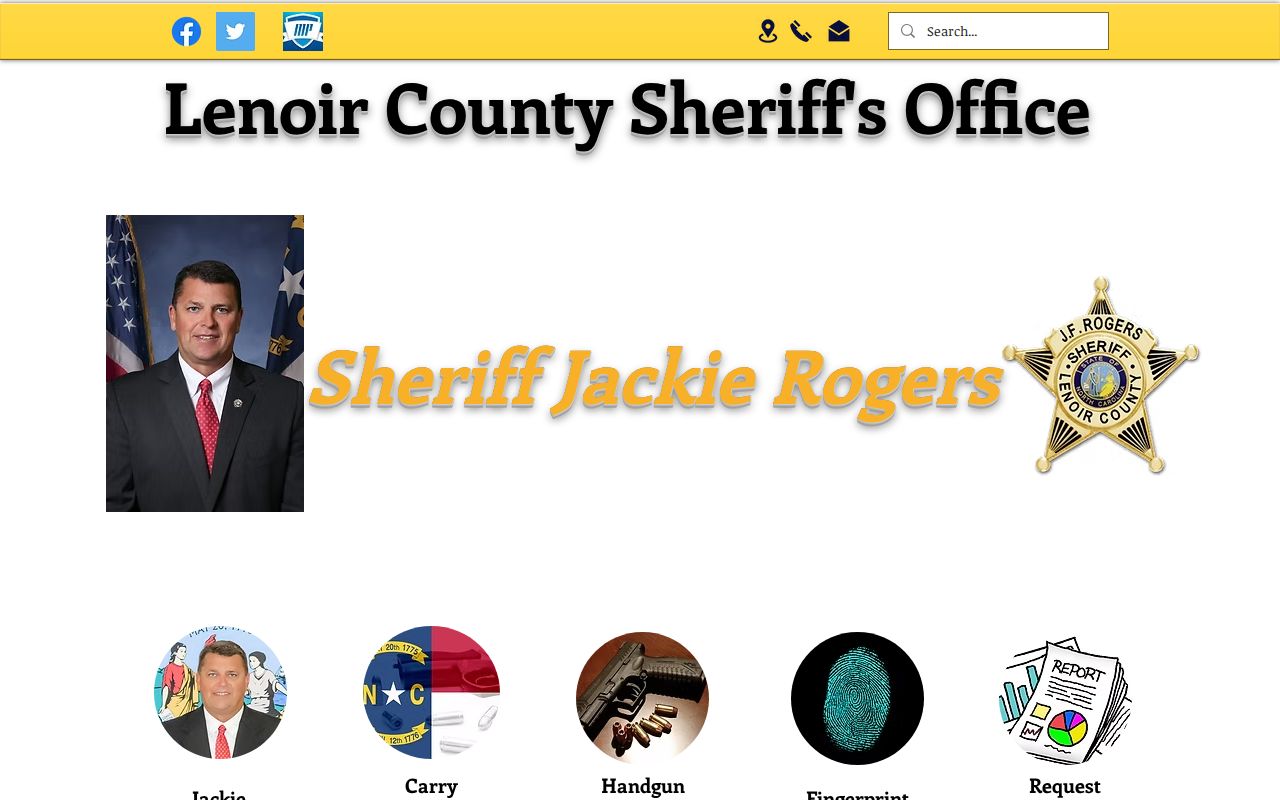
When a call does not resolve the request, ask about counter inspection, mail a focused Chapter 132 request to P.O. Box 3289, Kinston, NC 28502, or confirm whether fax submission to (252) 527-3854 is accepted. Agencies need not create a new compilation.
Lenoir County Criminal Incident Reports
Lenoir County police and incident reports remain with the agency that created them. LCSO Records handles sheriff-originated events. Kinston Police keeps reports made by its officers. La Grange receives contracted sheriff coverage, while Pink Hill Police is a separate town agency. Highway Patrol and campus police also have their own records channels. The Lenoir County clerk does not hold the police narrative merely because a prosecution later appears in court.
Ask for the public incident or arrest information listed in G.S. 132-1.4(c) even if an agency withholds the full investigative narrative. That public set can include the time, date, place, and nature of the apparent violation, plus specified facts about an arrested, charged, or indicted person and the circumstances of arrest. Witness statements, intelligence, surveillance, protected emergency-call content, and active investigative details can remain outside ordinary access.
A crash report follows the investigating agency's official process. Body-worn camera material uses special procedures under North Carolina law and should not be treated as a routine report copy. Confirm fees and submission methods with the proper agency because LCSO does not publish a report-copy fee schedule or an online request form.
What a Lenoir County Criminal Record Shows
The Lenoir County fields depend on the record. A repository history is organized around identity and fingerprint-linked arrest cycles. A Lenoir County court file is organized around a case number. A booking file centers on intake and custody. Comparing those structures prevents a common mistake: reading a booking charge as if it were the court's final judgment.
| Name & Identifiers | Current and alias names, birth details, physical descriptors, and state or FBI identifiers when assigned. |
|---|---|
| Arrest / Booking Data | Agency, arrest and intake dates, transaction or booking number, and charges as recorded at intake. |
| Charges & Statutes | Alleged offenses, filed charges, and cited laws, which may differ across stages. |
| Disposition | Dismissal, guilty plea, verdict, acquittal, or other recorded outcome. |
| Sentence | Custody, probation, financial obligations, restitution, and other terms ordered by the court. |
| Custody / Supervision | Release, jail status, prison placement, probation, parole, or post-release status when that system applies. |
- Disposition
- The recorded outcome of a charge or case.
- Indictment
- A grand-jury accusation commonly used to move a felony toward Superior Court.
- Expunction
- Statutory removal of a qualifying record from ordinary public access, which is not the same as dismissal.
Match the Lenoir County record by more than a name. Case number, date, agency, party role, and charge history help separate people with similar names and reveal whether a later outcome belongs to the same arrest cycle.
Lenoir County Jail Record Limits
The W.E. “Billy” Smith Detention Center creates Lenoir County booking and custody records. No complete official public web roster was verified. Current-custody questions therefore start with the detention line at (252) 559-6100, followed by an in-person inquiry under facility rules or a request for public booking facts from Records. NCDAC Public Offender Search applies after state sentencing or to state supervision. It does not replace the county pretrial inquiry.
The official Detention Division page explains the named facility and its functions.
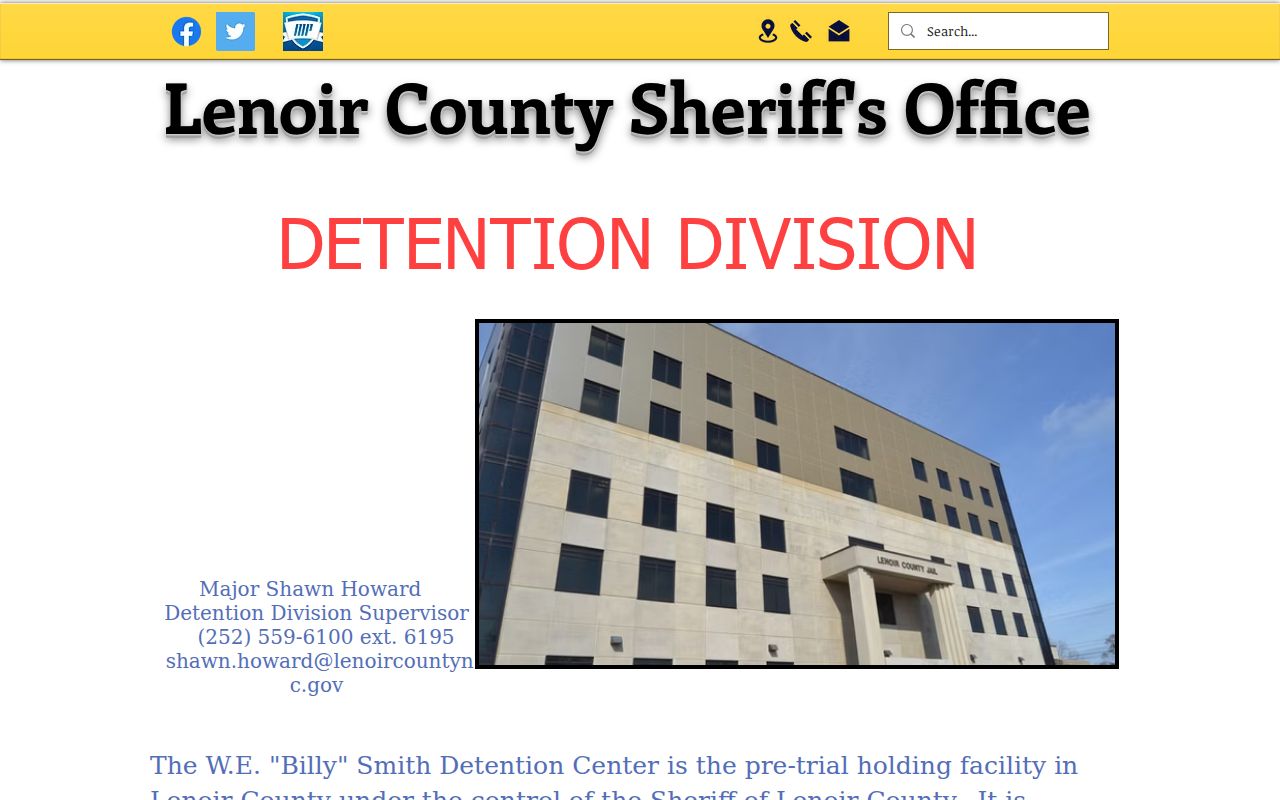
The capacity description deserves care. One county source describes responsibility for 285 beds. The division page explains a 200-capacity newer facility combined with the prior 85-inmate capacity. It should not be reduced to one unsupported building figure.
Public Access Laws
North Carolina law assigns access by record type. Chapter 132 begins with public access to government records unless an exception applies. Law-enforcement investigative and intelligence files are not open as a whole, yet state law keeps a defined set of basic incident and arrest facts public. Court records have a separate clerk-access rule. Juvenile, sealed, victim-identifying, protected-order, and unreturned-warrant material can remain restricted.
Key statutes:
G.S. 132-1 and 132-1.4 make public records presumptively open while limiting investigative files and preserving listed incident and arrest facts.
G.S. 7A-109 directs clerks to keep court records and provide lawful inspection and copies.
G.S. 15A-146 governs expunction for qualifying dismissals and not-guilty outcomes.
G.S. 14-208.10 defines public registry information while protecting victim identity.
Ask the creating police agency for its Lenoir County report, the clerk for the case file, SBI for one's repository self-review, and NCDAC for state correctional data. A denial of a full narrative does not end a request for the Lenoir County arrest facts listed in G.S. 132-1.4(c).
Lenoir County Warrant Record Chain
No verified Lenoir County public active-warrant database was found. Portal can show docket activity tied to process that has been returned or executed, but ordinary public users cannot see unreturned criminal warrants. A person checking their own possible warrant should call the sheriff at (252) 559-6100 and ask for Records or Reports Processing. The magistrate line is (252) 520-5430, and the clerk is (252) 520-5300.
An empty web search does not prove no warrant exists. The issuing court and law-enforcement agency are the reliable confirmation points. After a warrant is resolved, allow for data entry and verify status again. Orders for arrest may arise after a missed appearance or other noncompliance, while search warrants often remain restricted during an investigation.
Note: Get legal advice before arranging an appearance or surrender when a possible warrant may lead to immediate custody.
Lenoir County Criminal Charge Classes
North Carolina divides felonies into Classes A through I and misdemeanors into Classes A1, 1, 2, and 3. A class describes the legal category, but it does not state the inevitable sentence. Felony punishment depends on the offense class, prior-record level, and the mitigated, presumptive, or aggravated range under G.S. 15A-1340.17. Misdemeanor punishment depends on the class and prior-conviction level under G.S. 15A-1340.23.
Superior Court tries Lenoir County felonies. District Court handles felony preliminary matters and tries misdemeanors. The most serious felony class is A, followed through I. Misdemeanor A1 is the highest misdemeanor class, followed by 1, 2, and 3. G.S. 14-3 supplies a default classification when an offense statute does not set one.
Read the statute effective on the offense date and the final judgment. An arrest report may use an initial charge description that later changes through prosecutor review, indictment, plea, dismissal, or verdict. The court file, not the booking label, shows how the charge was finally handled.
Sealed, Expunged & Restricted
Expunction is North Carolina's statutory term for removing qualifying records from ordinary official and public access. It is not the same as a dismissal. G.S. 15A-146 directs automatic expunction for some cases in which all charges were dismissed or resulted in not guilty, generally 180 to 210 days after final disposition for qualifying outcomes on or after December 1, 2021. Exceptions apply, and an arresting agency may retain investigative records.
Petition-based relief uses the current AOC form filed with the Lenoir County Clerk when the charge or conviction arose here. Grounds differ for dismissals, certain nonviolent convictions, age-based relief, identity theft, drug provisions, and other categories. A $175 fee applies under G.S. 15A-146 when dismissal followed compliance with deferred prosecution or conditional discharge. Other forms can have different rules.
After an order, the clerk sends it to listed agencies. Check the clerk record and later order an SBI Right to Review to verify one's repository history. A Certificate of Relief may reduce some legal barriers but does not erase the record.
Lenoir County Correctional Record Routes
The NCDAC Offender Public Information Search can show people who are or were in state prison, on probation, on parole, or under post-release supervision. Lenoir County pretrial detainees are outside that locator. For a judgment, use the clerk or Portal. For current pretrial custody, call the county detention center. VINELink can add custody notifications, but it may lag the holding agency.
Probation and post-release supervision are run by NCDAC Community Supervision. Release and parole decisions fall to the North Carolina Post-Release Supervision and Parole Commission. Public records may show status, sentence, offense, admission, release, and supervision data. Internal officer notes, treatment details, risk assessments, and case-management files should not be assumed public.
A violation filing can appear in eCourts. It may result in modified terms, a short confinement response, revocation, or an order for arrest. If the order is still unreturned, a public Portal user may not see it.
Lenoir County Judicial Record Requests
Case files should go to the Clerk of Superior Court. Administrative Judicial Branch records use a separate request route. Sending a case-copy request to the statewide administrative channel can delay the answer because the clerk is the local custodian. The requester should give a case number when possible, the party name, record description, and a useful date range.
The Judicial Branch public-record request page explains that division of responsibility.
If a Lenoir County document is missing online, ask the clerk about the paper file, archive search, a public terminal, or a copy. Portal downloads public documents one at a time, and large files may need the clerk to divide them.
Criminal Records by City in Lenoir County
Lenoir County has three incorporated municipalities. Kinston Police makes city reports, La Grange receives contracted sheriff coverage, and Pink Hill Police keeps its town police records. Booking and criminal prosecution still move into the county jail and unified state court system. The city guides preserve those local routes without confusing a town report with the later Lenoir County court file.
Kinston Criminal History
19,490 · Kinston Police records route to county detention and courts.
La Grange Criminal History
2,695 · Contracted Lenoir County sheriff deputies provide town coverage.
Pink Hill Criminal History
451 · Town police records stay local before county booking and court action.
The population figures use North Carolina OSBM's Vintage 2024 municipal estimates. They also avoid a common mistake: the City of Lenoir is in Caldwell County and is not part of this county records system.